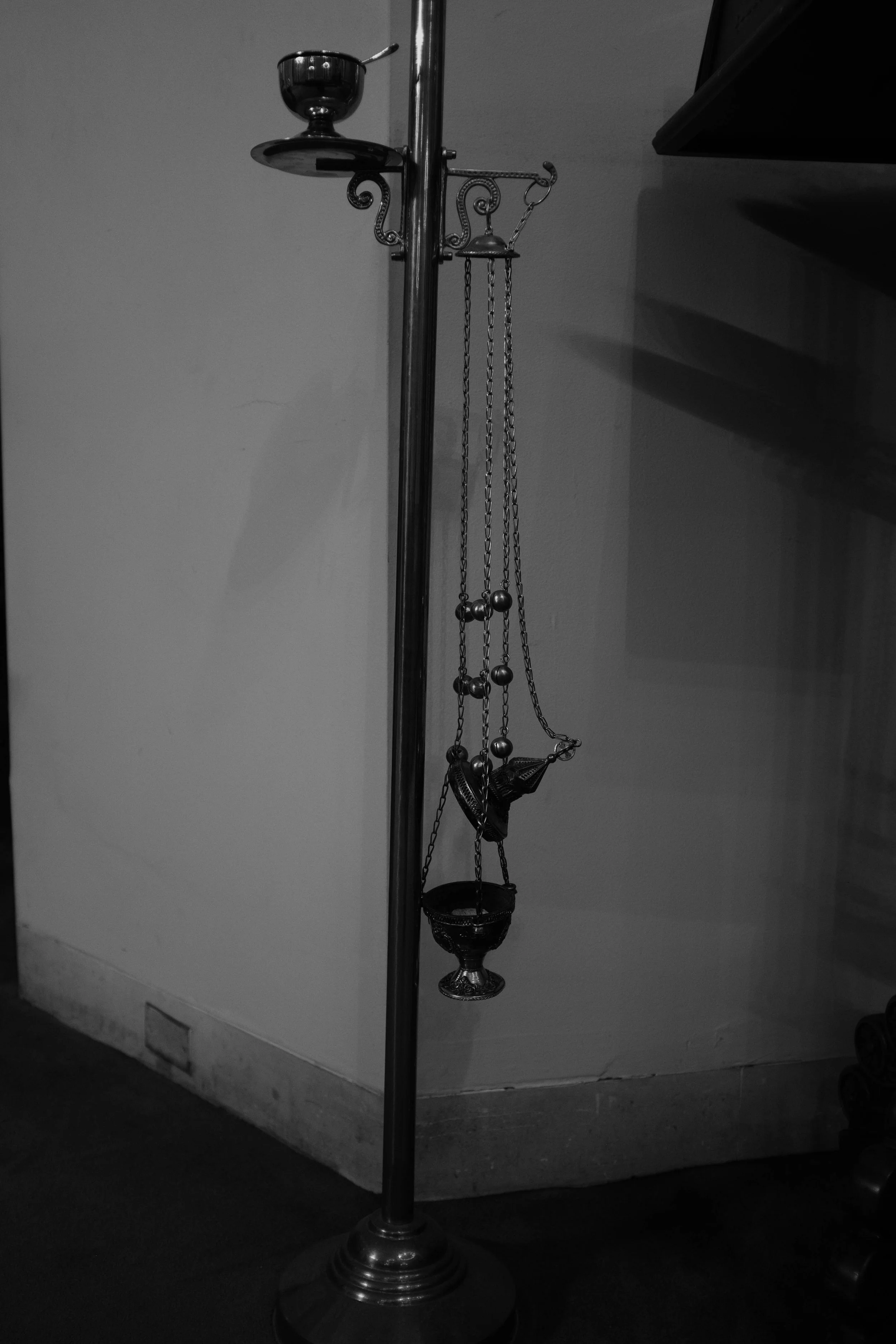
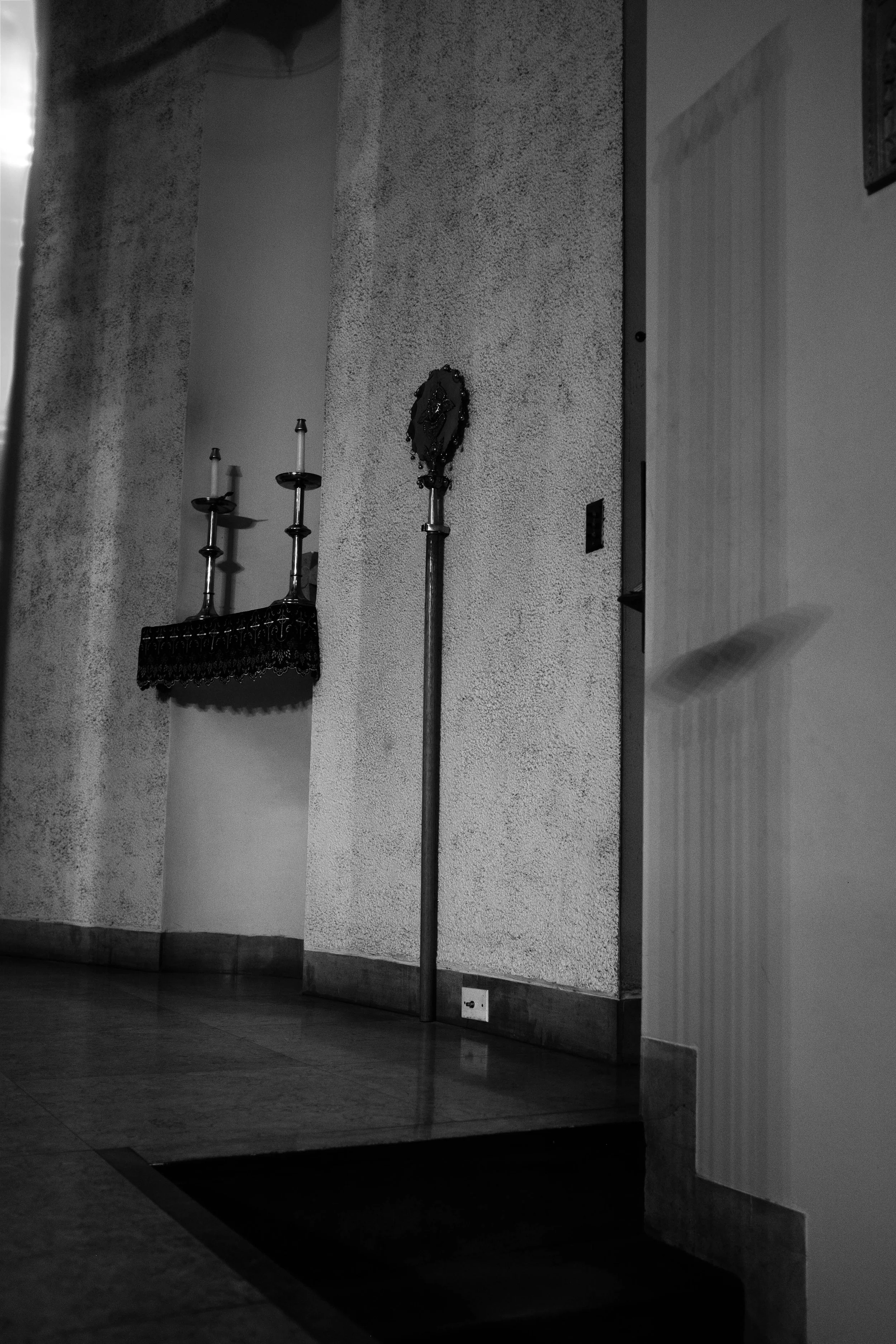
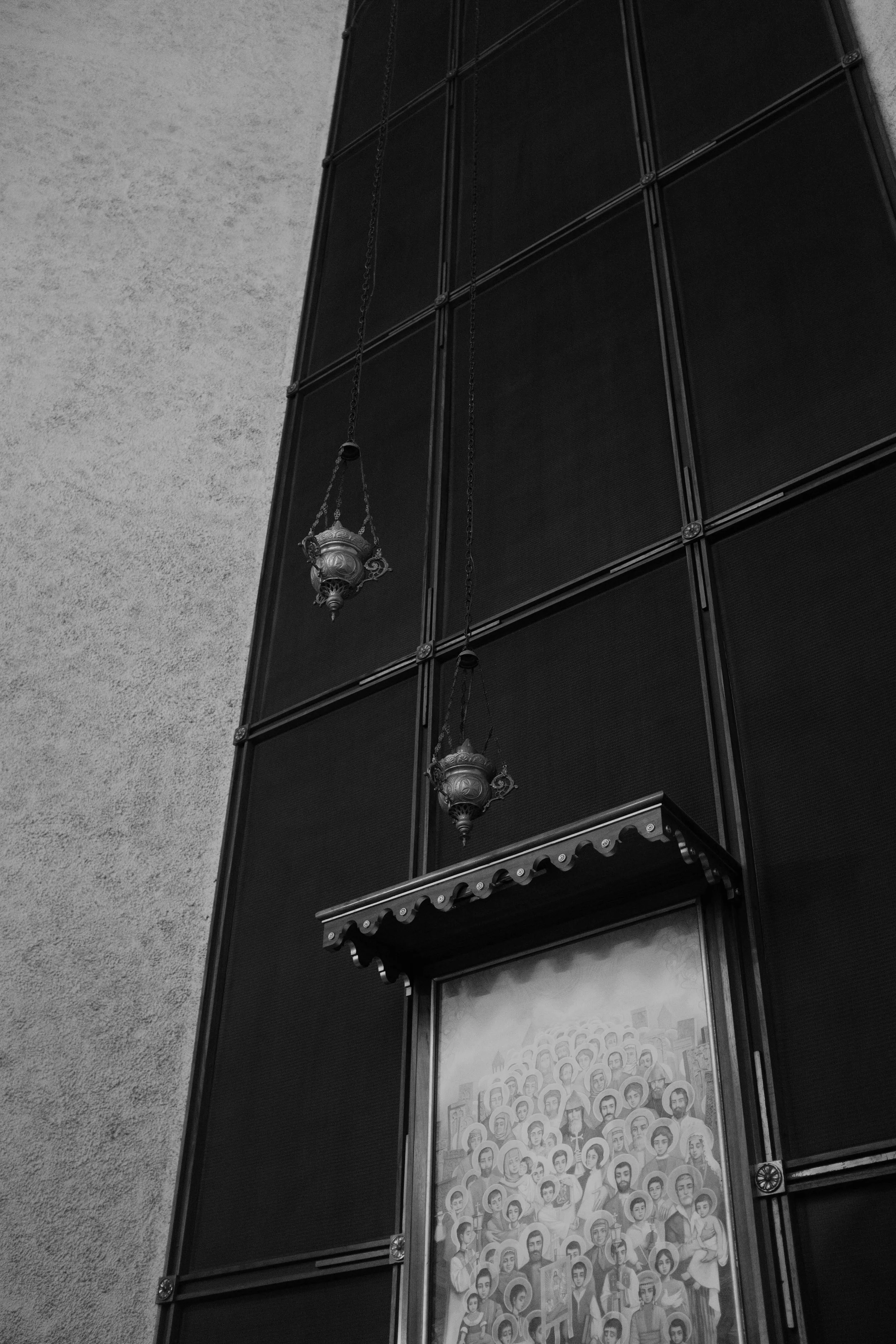
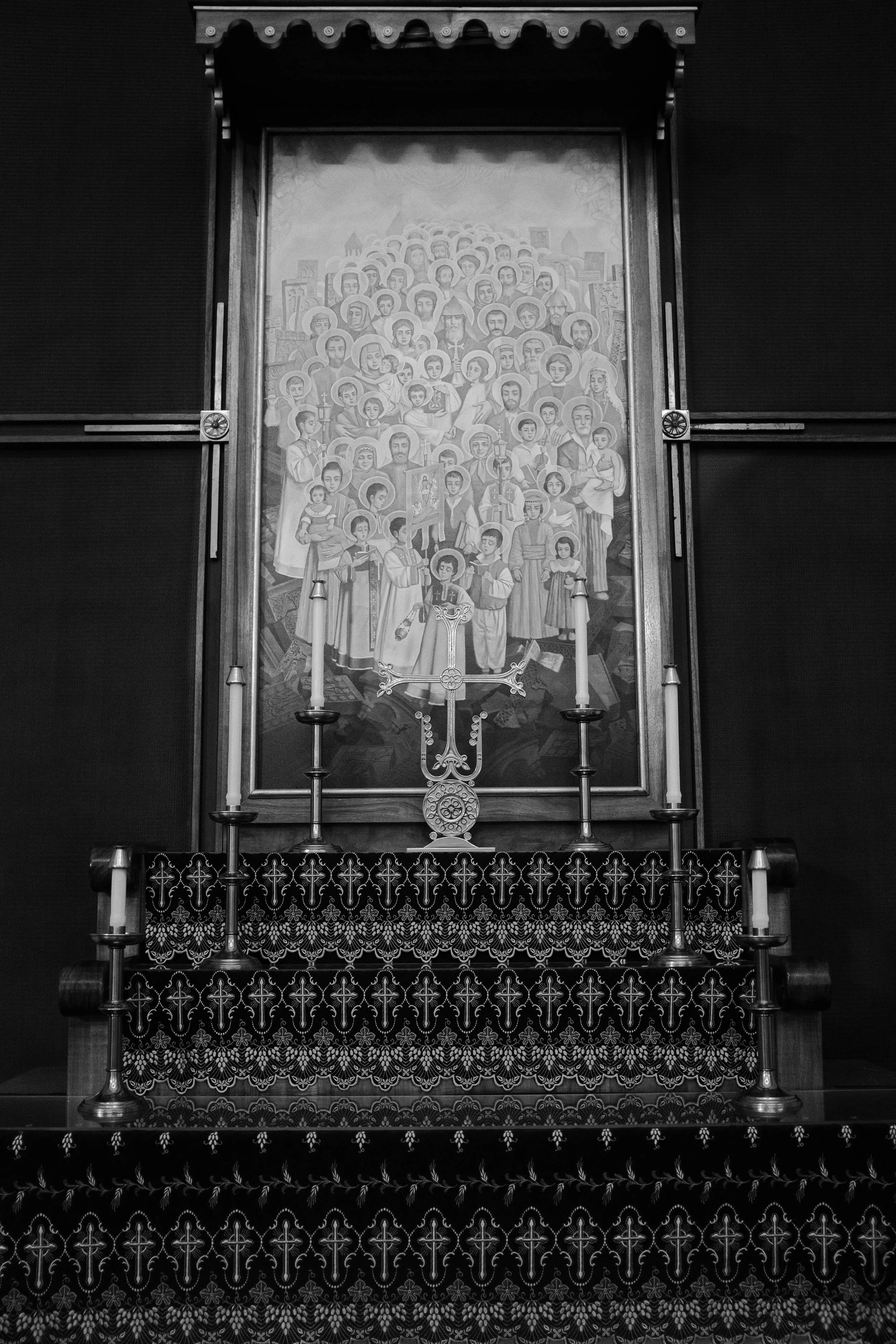
An Enduring Nation • Photograph Series • New York
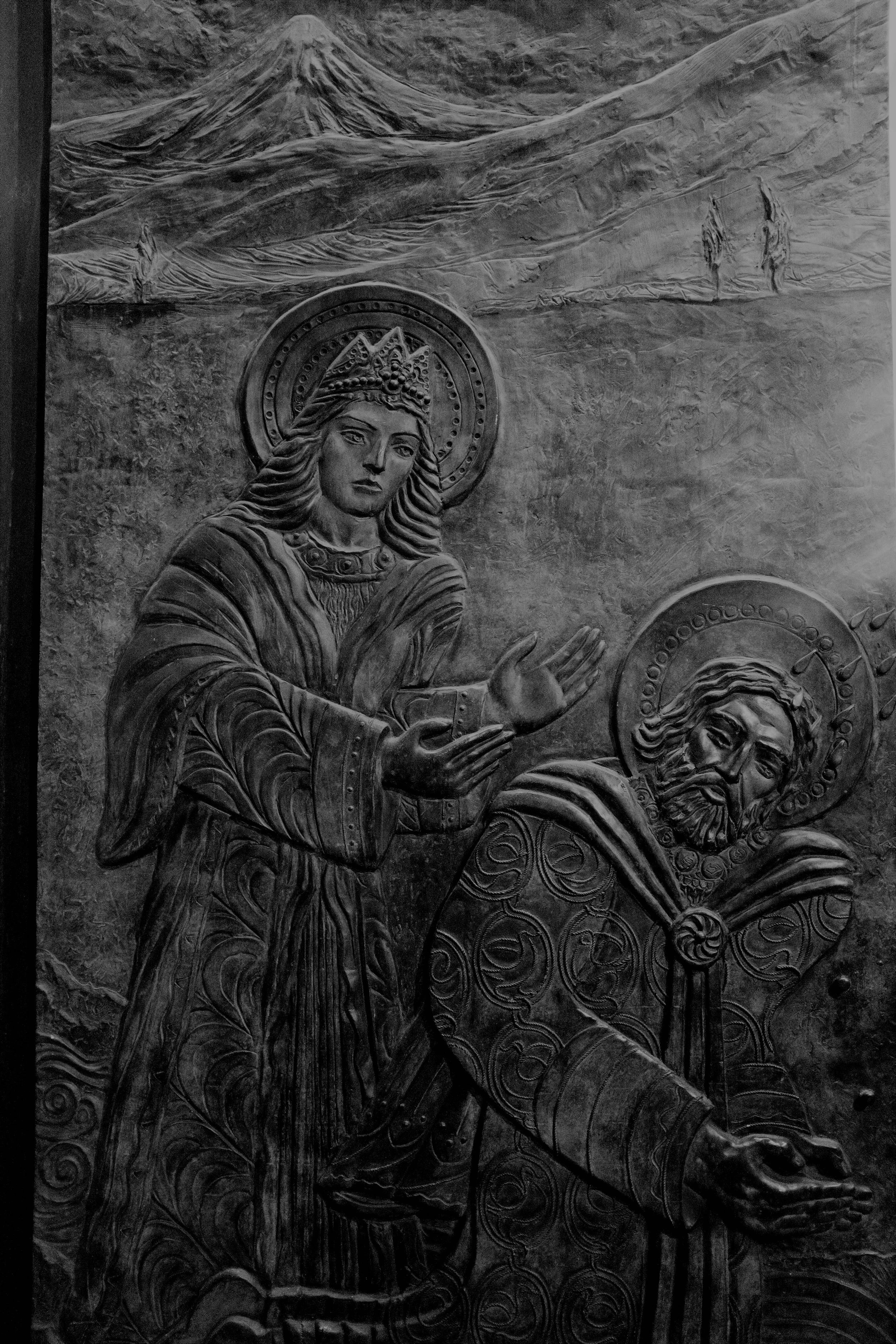
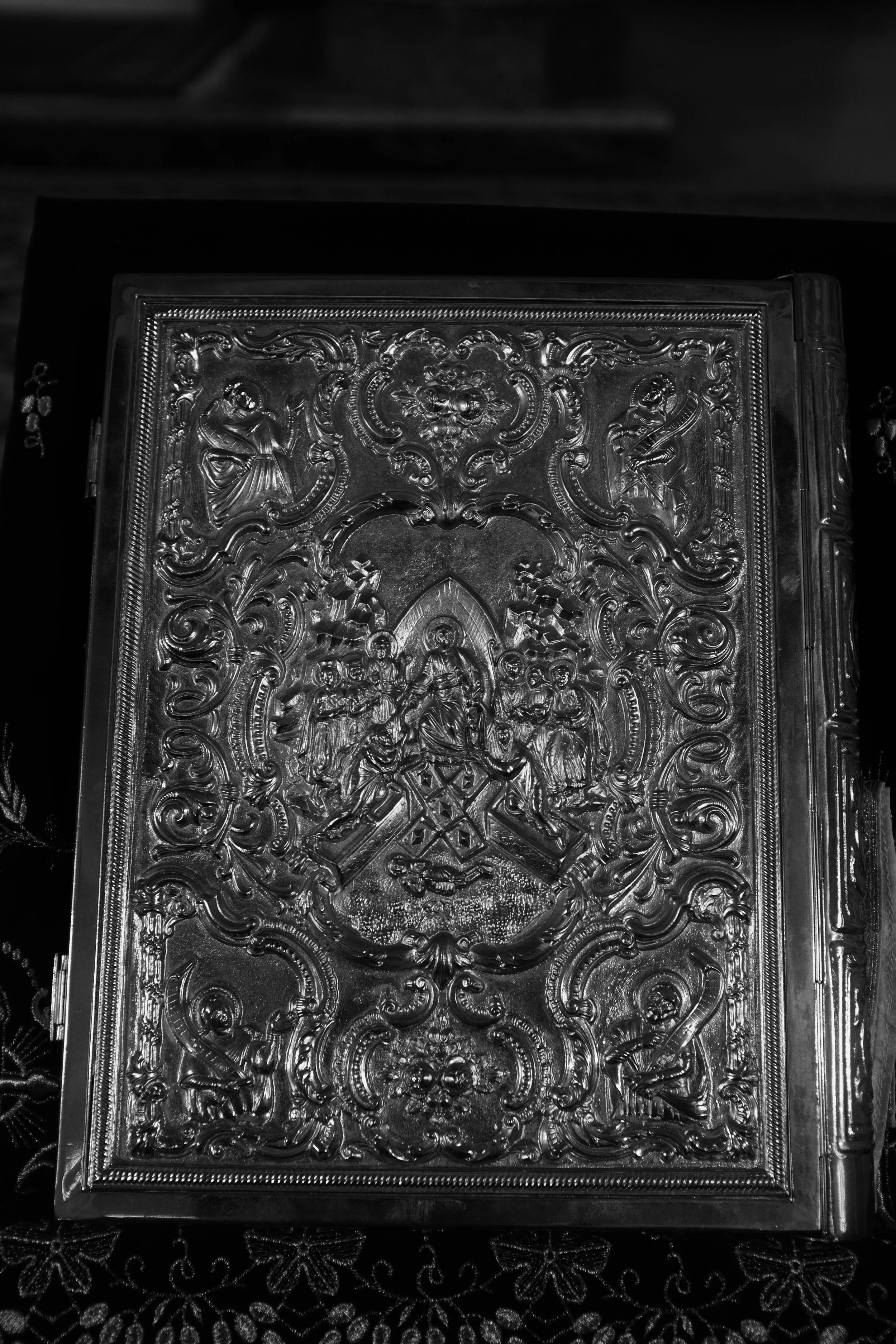
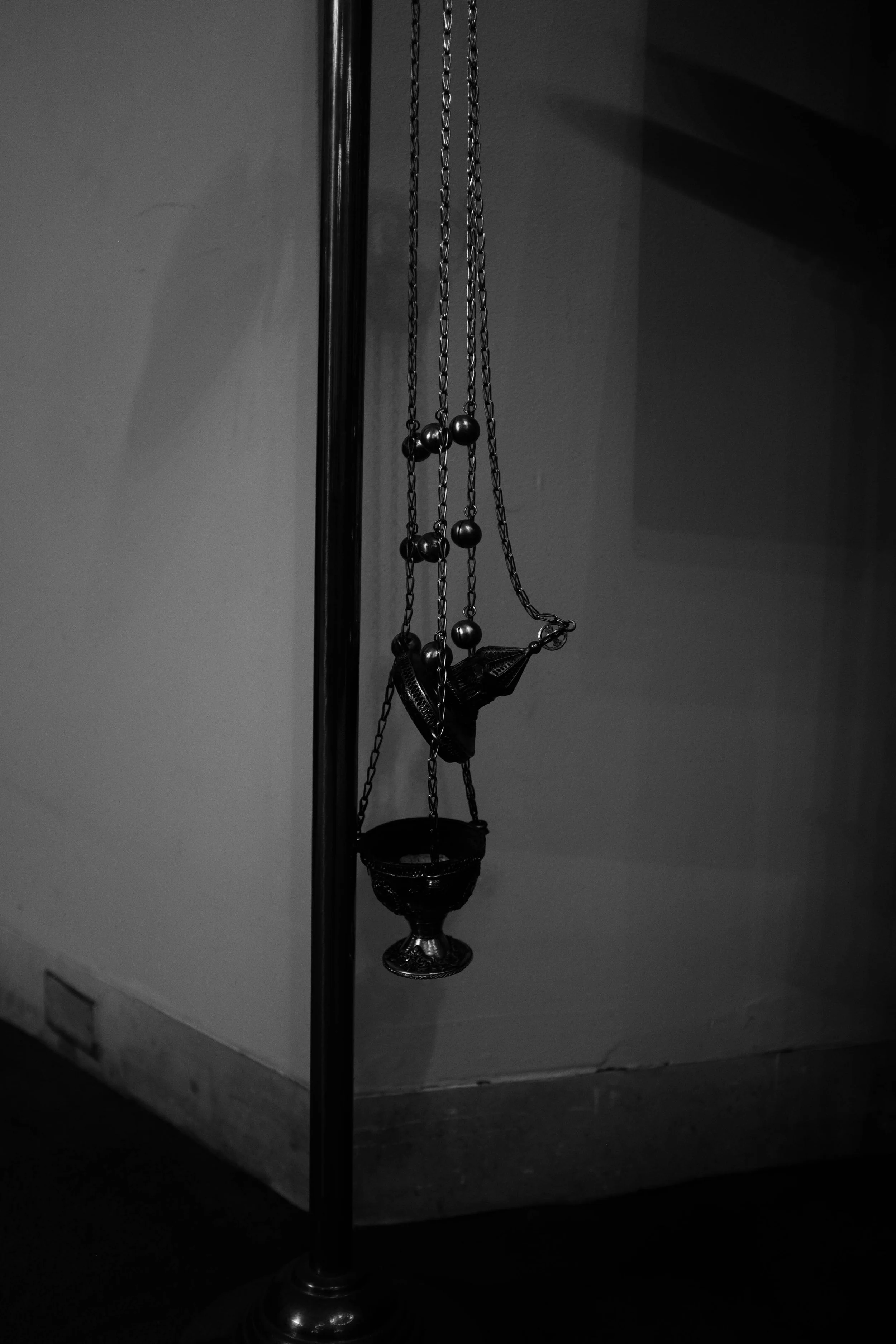
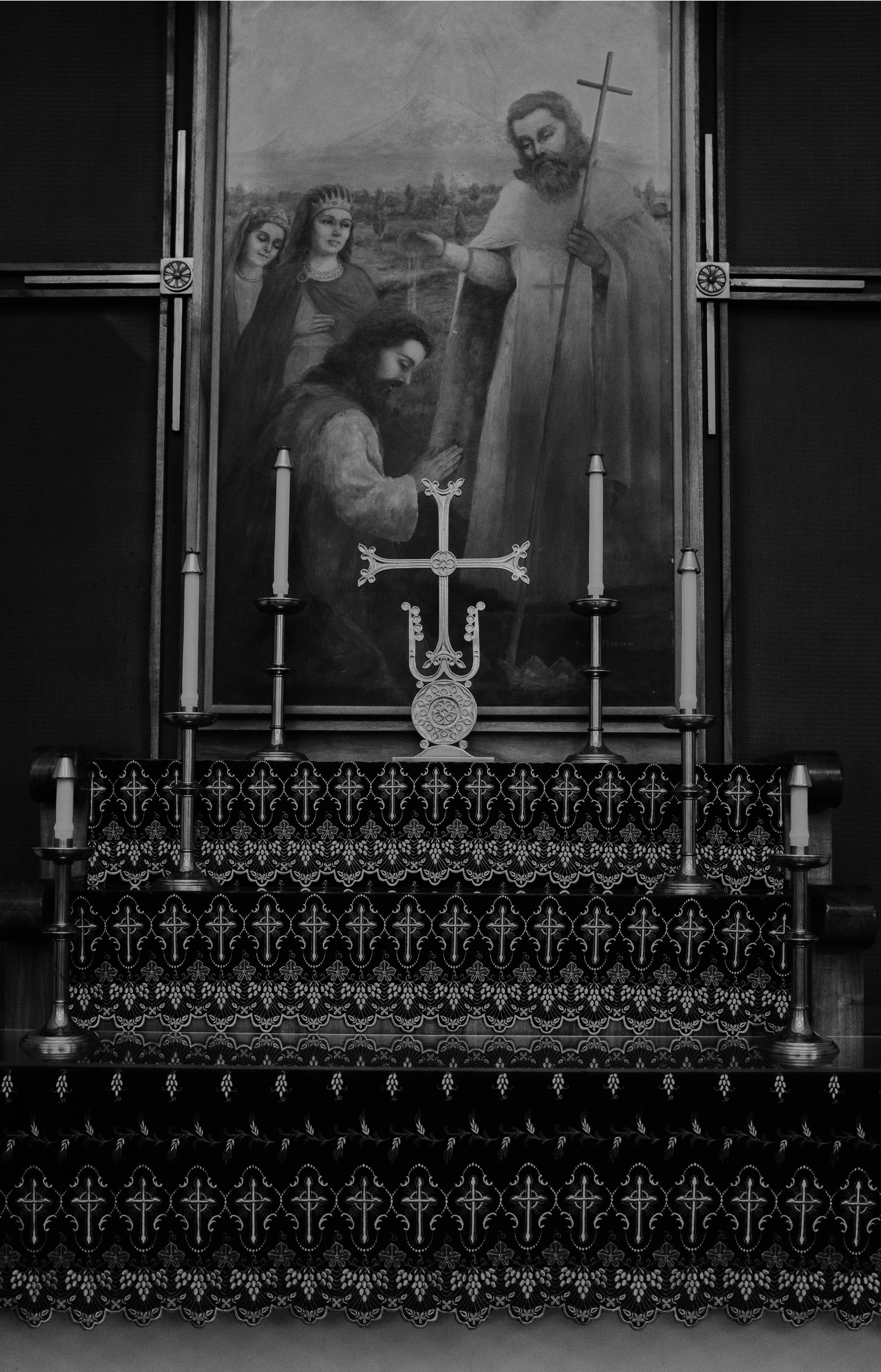
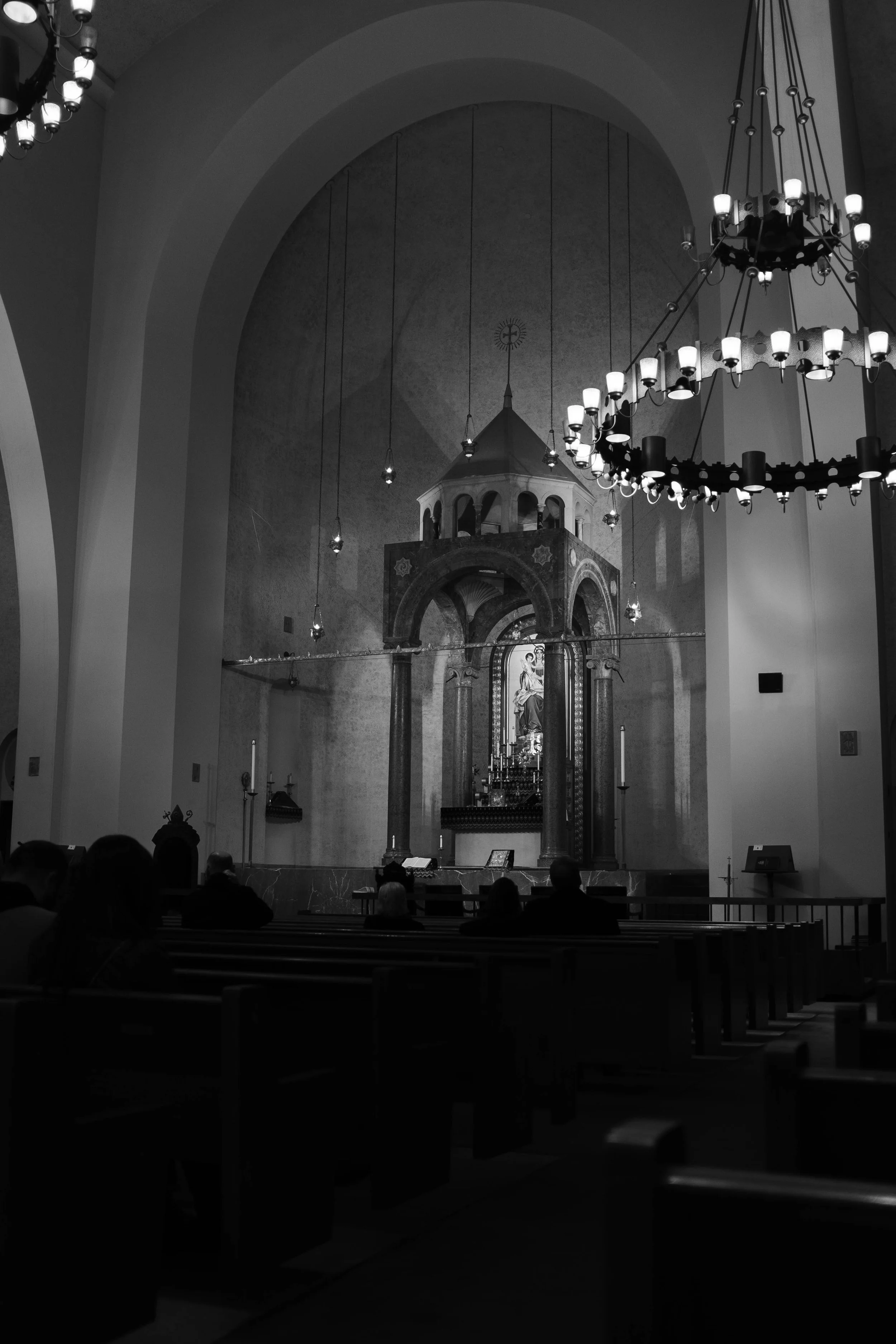
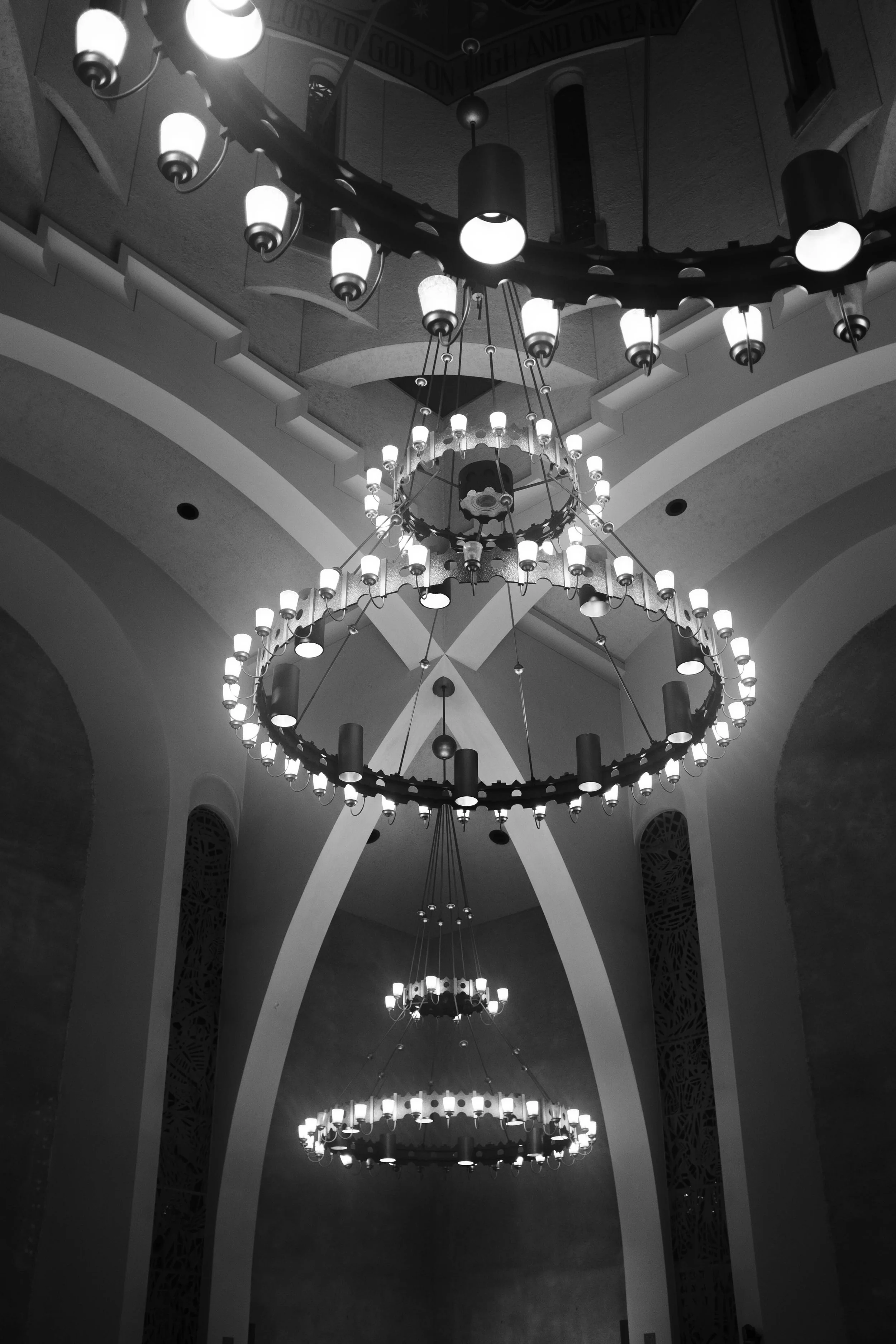
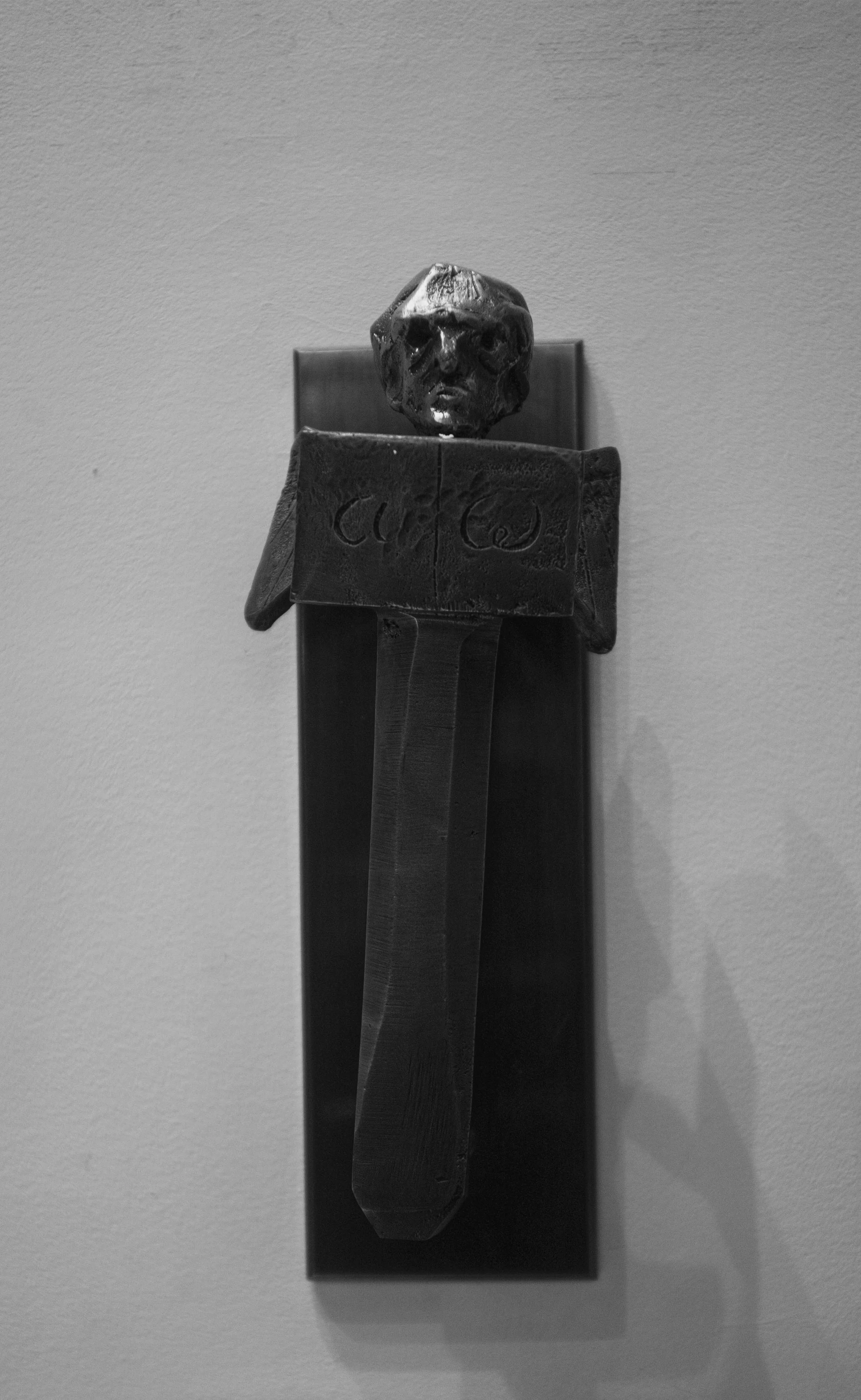
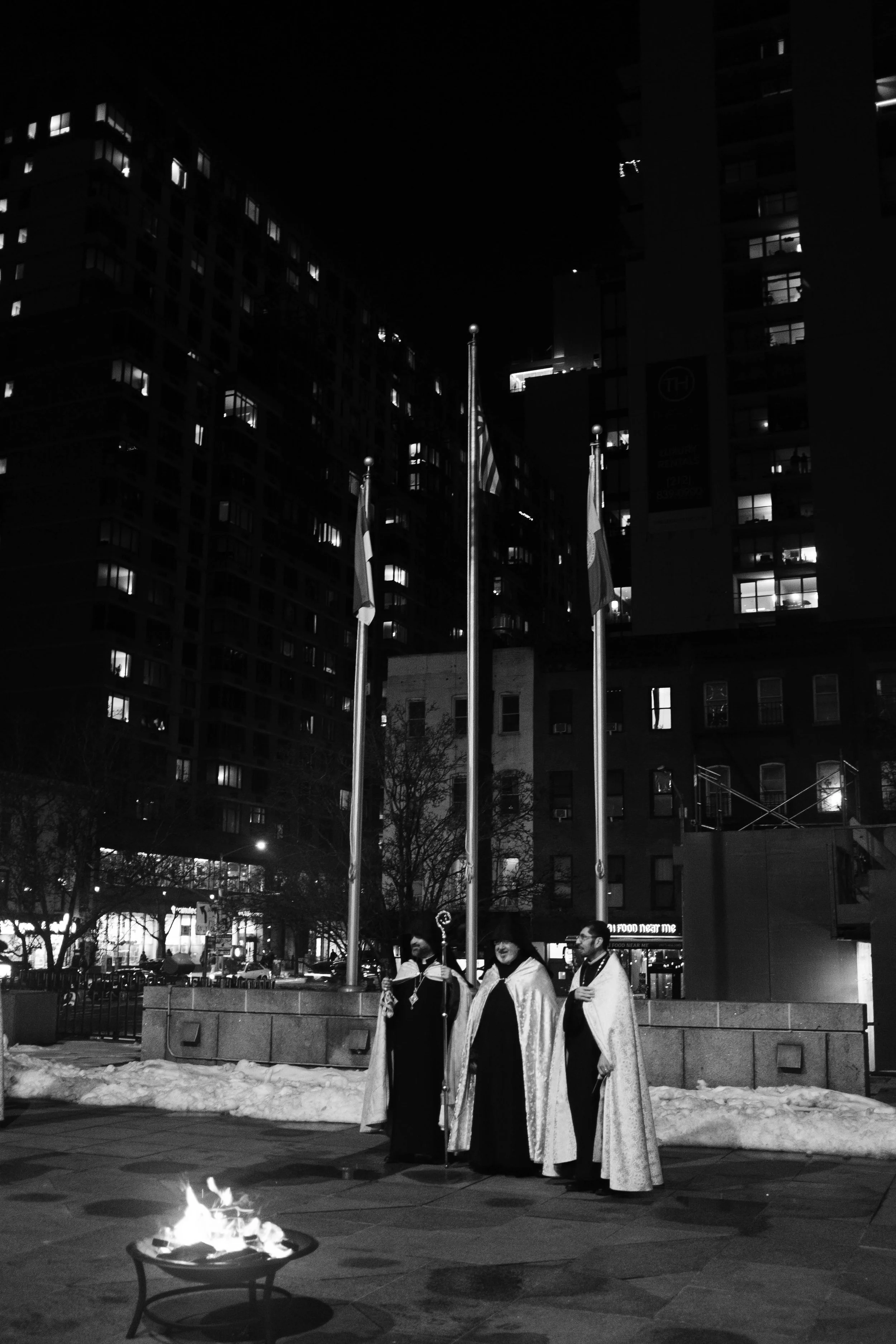
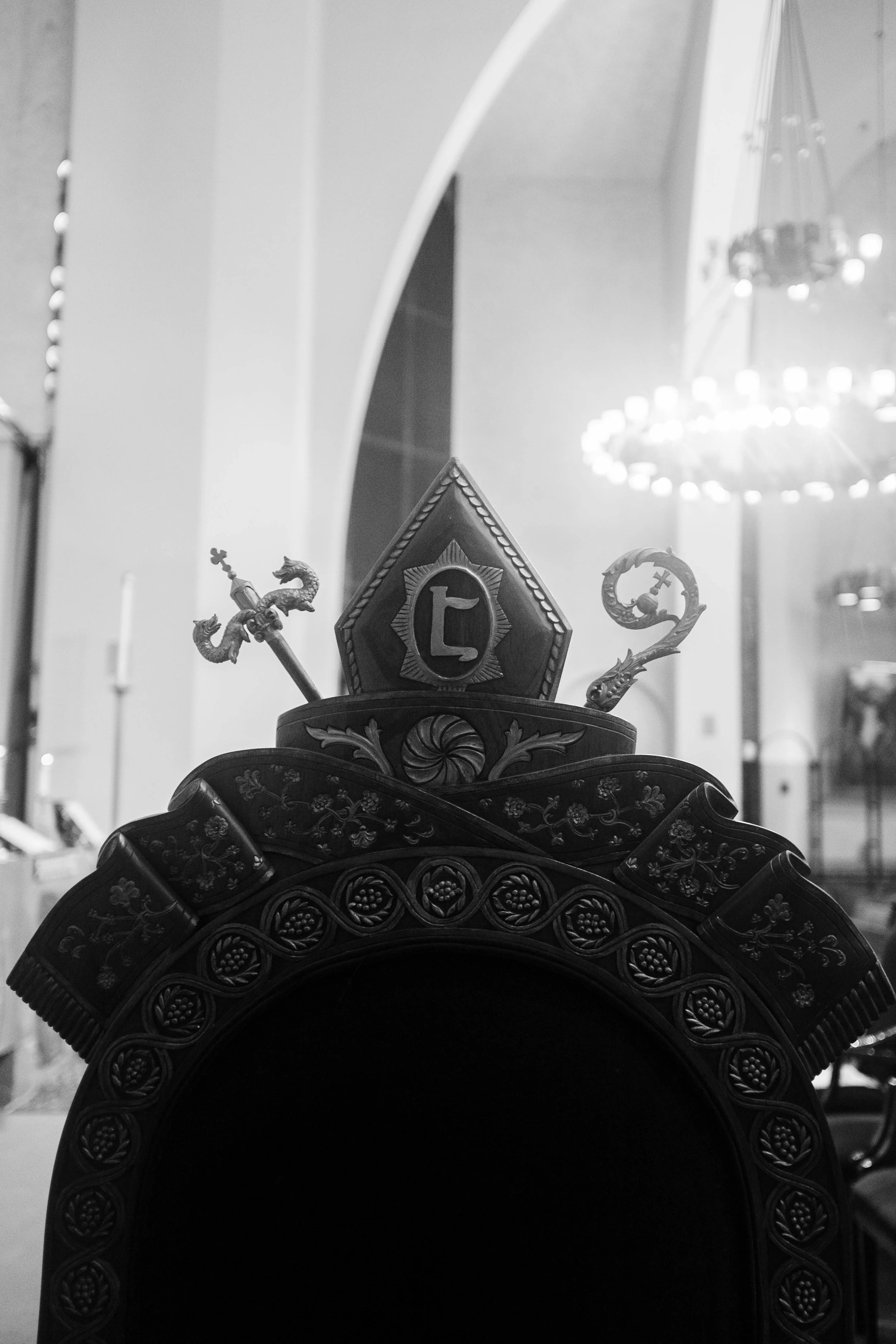
This series of black-and-white photographs traces the Armenian presence within New York City inside St. Vartan Armenian Cathedral and among the collections of the Metropolitan Museum of Art. In Manhattan, one of the world’s most visible and intensely modern places, Armenian themes persist. For a people who have endured persecution, forced displacement, and repeated attempts at erasure, the survival of these objects carries profound meaning. They are not simply remnants of a distant civilization. They are evidence of continuity, proof that Armenian faith, memory, and identity have crossed borders and generations without disappearing. Their presence in New York reflects the resilience of the individuals and families who rebuilt their lives here, worked tirelessly, formed institutions, supported the arts, and created spaces in which Armenian history could remain visible. At St. Vartan Cathedral, one photograph focuses on a bronze sculpture depicting the baptism of King Drtad III by St. Gregory the Illuminator in 301 CE. This moment is traditionally associated with Armenia becoming the world’s first Christian nation. A nearby plaque records the family who donated the work and the archbishop who consecrated it. Image, faith, history, family, and communal stewardship are compressed into a single object.
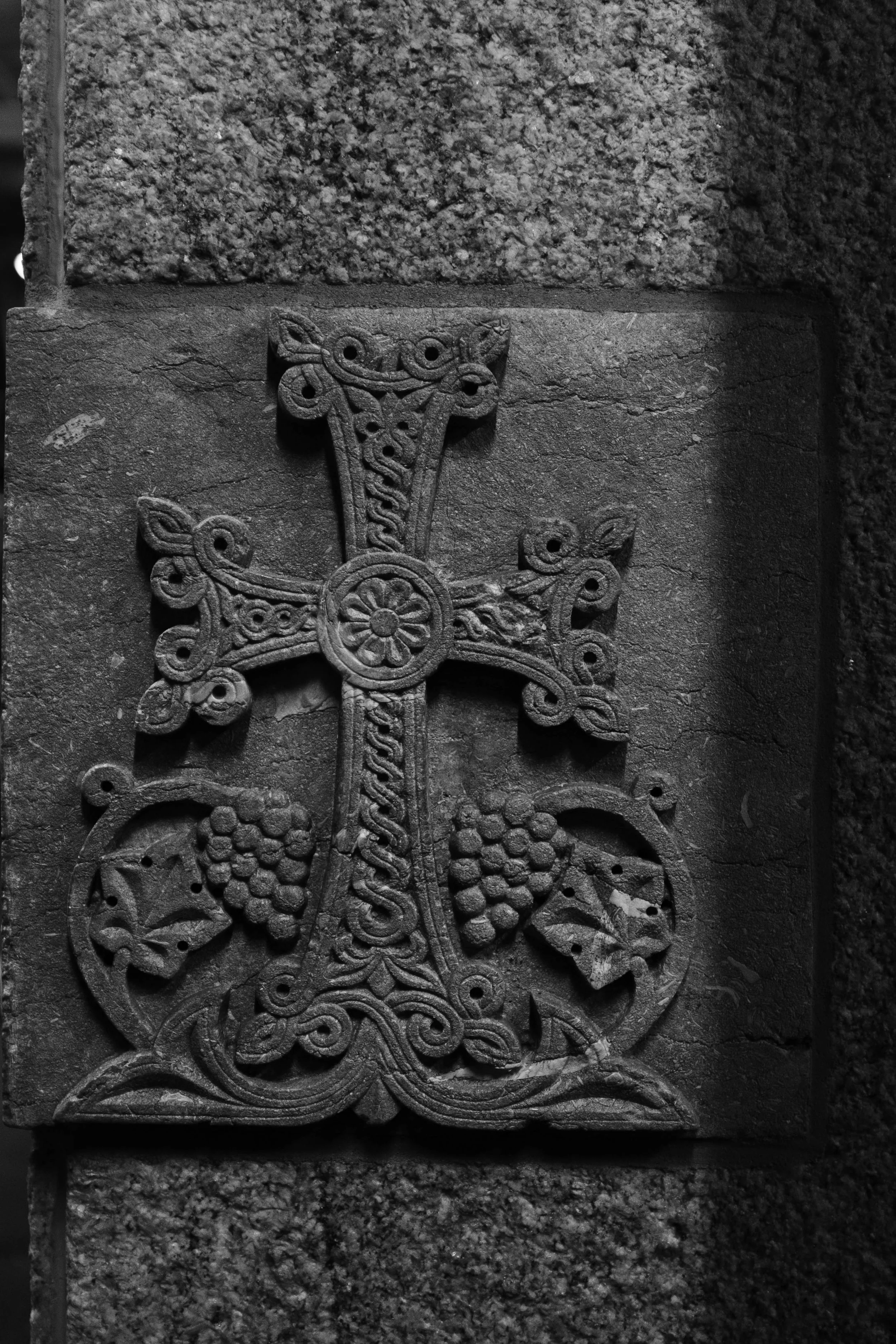
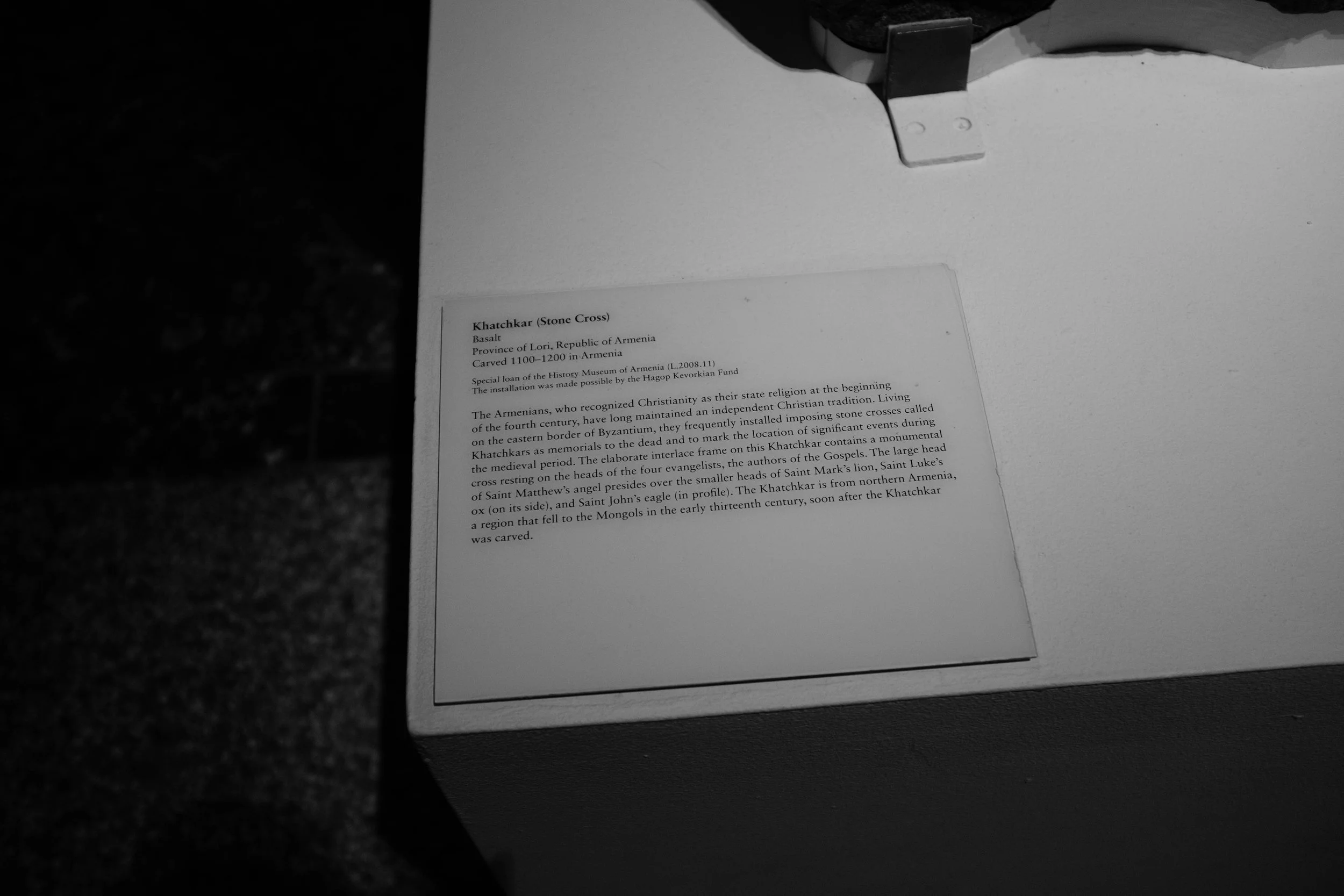
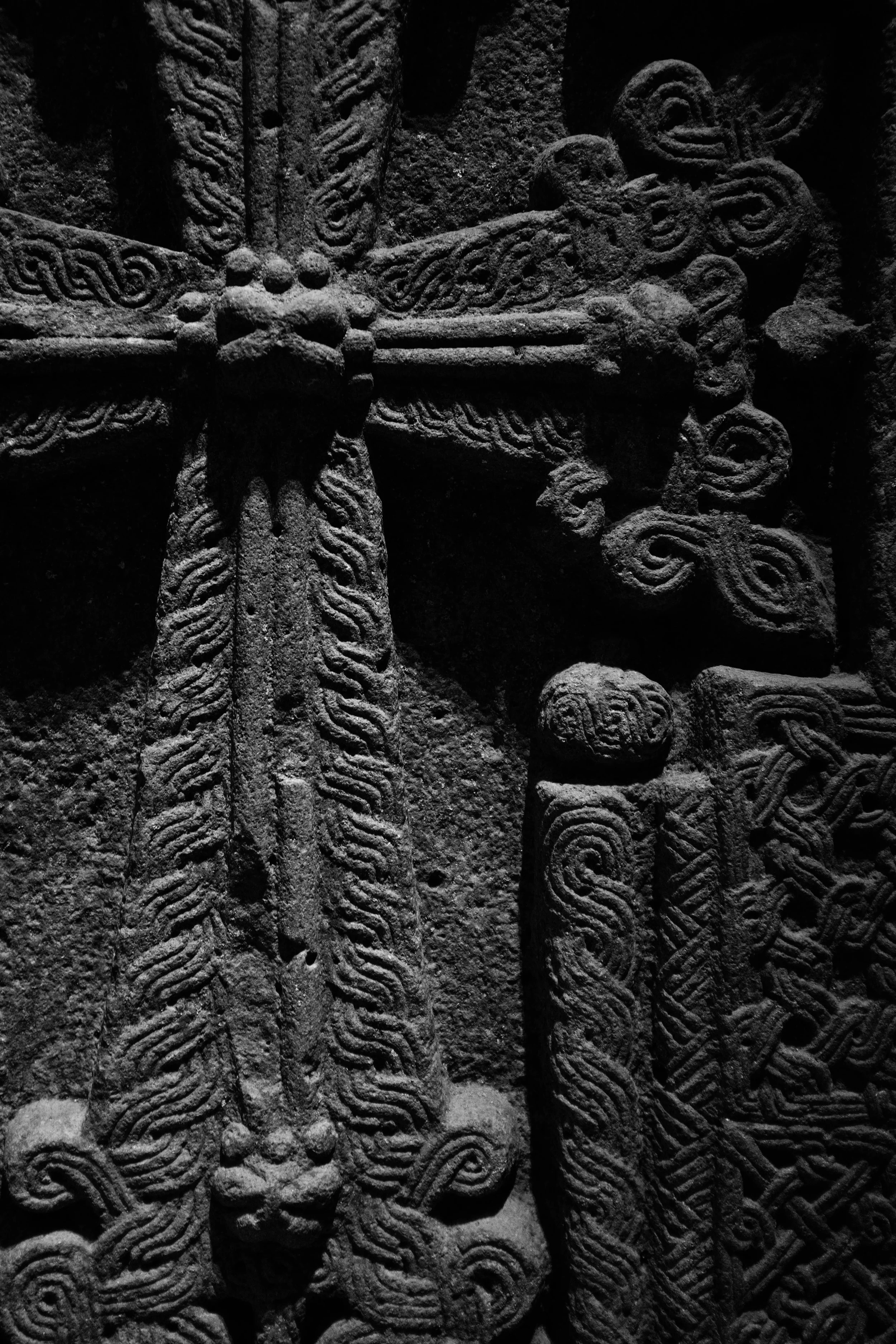
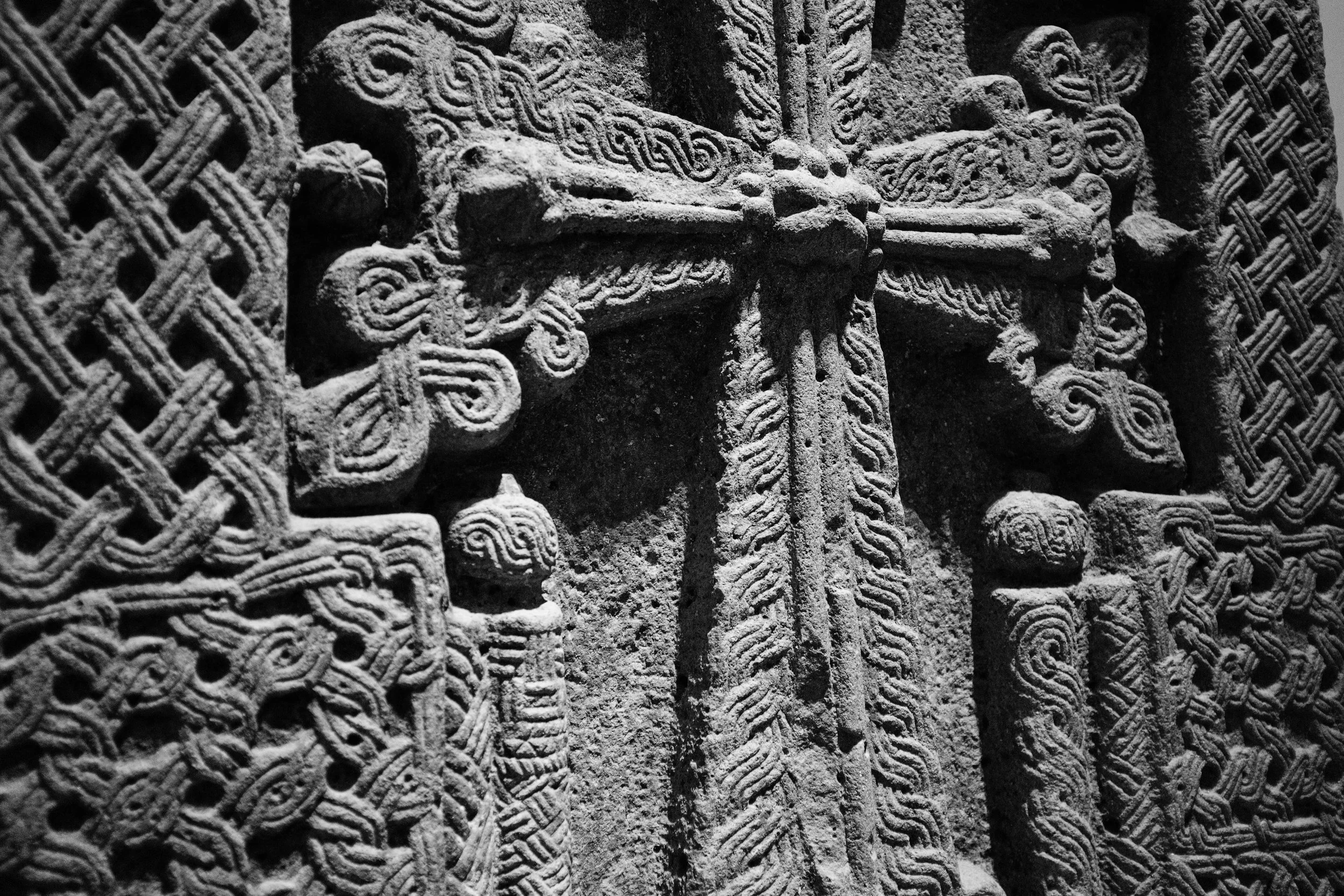
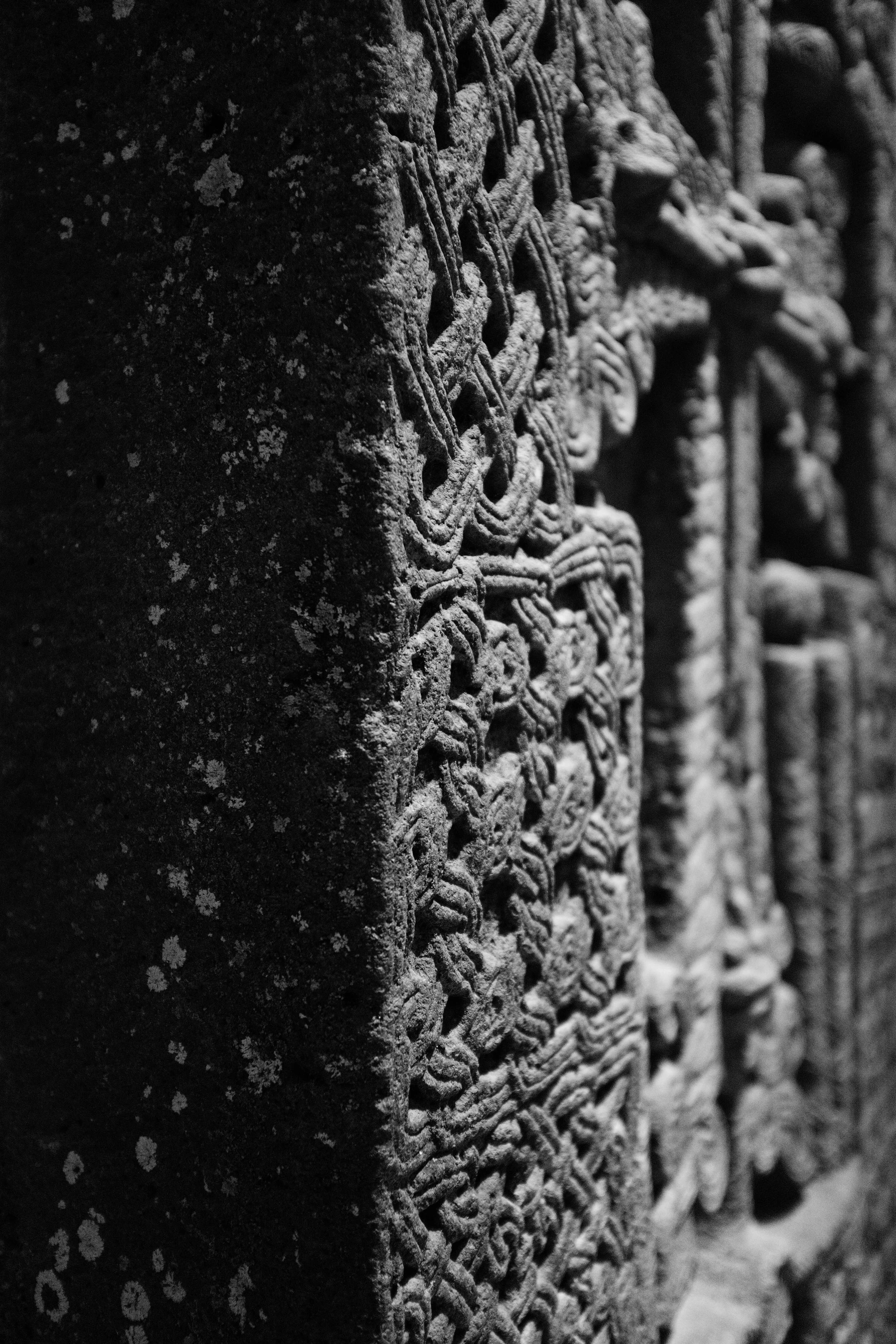
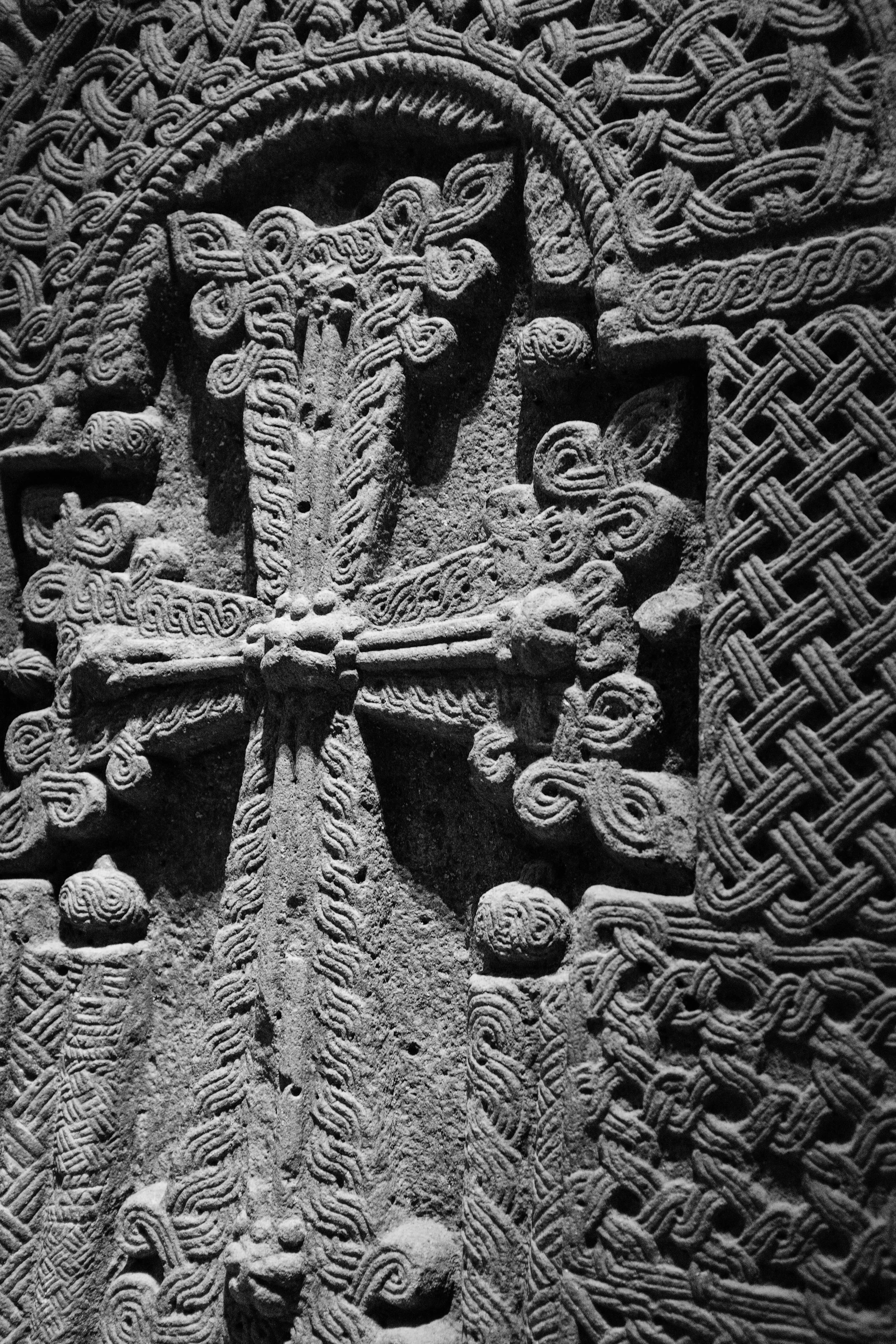
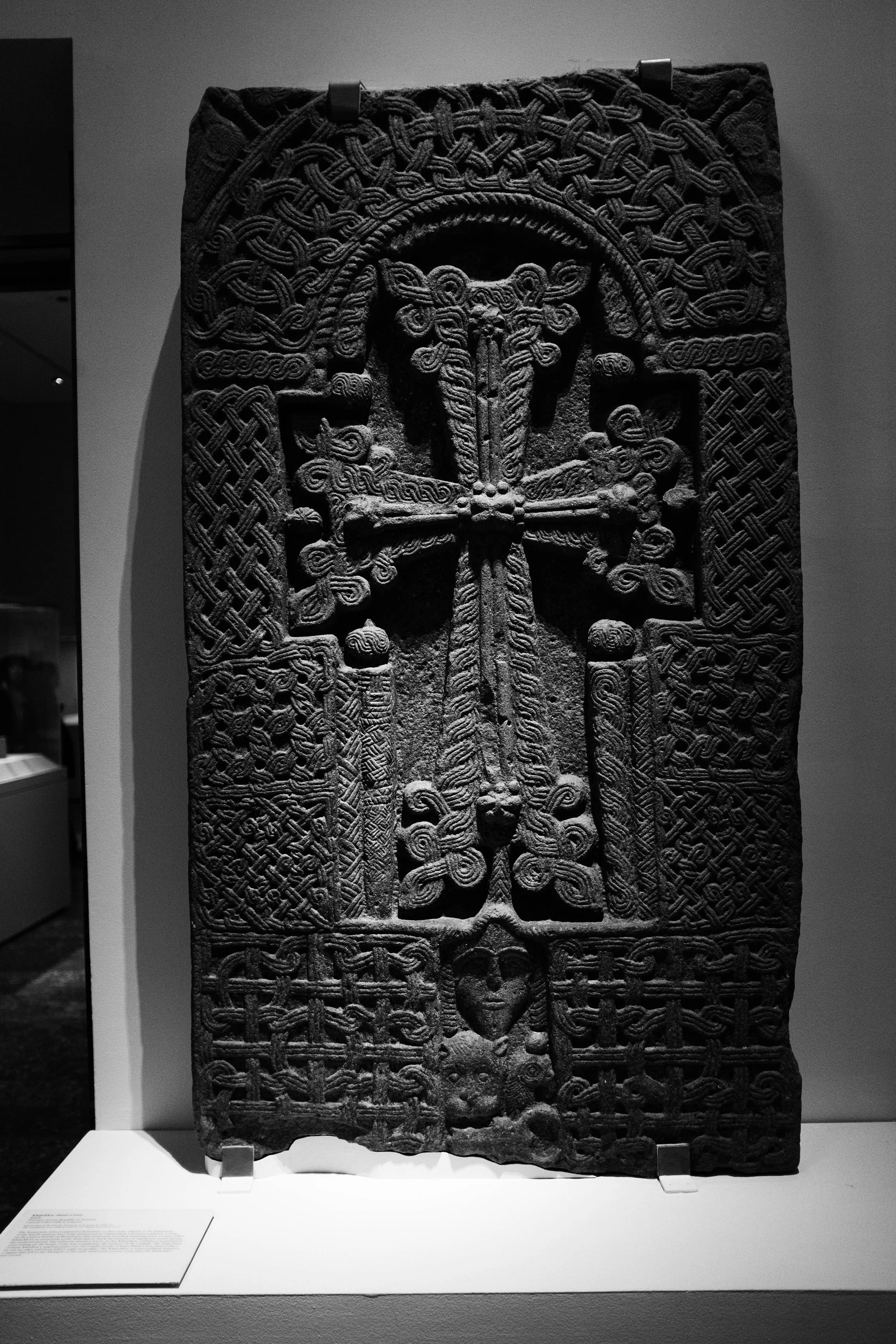
At the Metropolitan Museum of Art, Armenian imagery enters another kind of sacred space: the museum. The presence of a khachkar and other Armenian objects places the material culture of Armenia within a global account of human civilization. The Hagop Kevorkian Fund Special Exhibitions Gallery adds another layer to this story. It speaks to the influence of Armenian patrons whose prosperity became a means of cultural contribution, supporting institutions that preserve and present history for millions of visitors. Rendered in black and white, these photographs remove the distractions of color and draw attention to stone, metal, light, shadow, inscription, and form. The images move between reverence and discovery. They ask what it means to encounter Armenia far from Armenia, and how an ancient culture survives within the architecture of a contemporary city.
This series is ultimately not about artifacts alone. It is about the people behind them: those who created them, protected them, carried their traditions across continents, and ensured that Armenian culture would not be confined to memory. These objects remain because Armenians remain. In the heart of Manhattan, they stand as quiet but unmistakable declarations of survival, achievement, faith, and belonging.
2025
Photography (2025)
Khachkar / խաչքար
Stone Cross, 12th century
The Metropolitan Museum of Art
FujiFilm X-T1
Upper East Side, New York
Painting (2025)
Hagop Kevorkian (Յակոբ Գէորգեան,1872-1962), Armenian-American art dealer and collector whose work helped introduce Near Eastern and Islamic art to a wider audience in the United States. In 1951, he created The Kevorkian Foundation, which became an important source of support for the Metropolitan Museum of Art, funding fellowships, various publications, and acquisitions of Middle Eastern art.
The Metropolitan Museum of Art
FujiFilm X-T1
Upper East Side, New York
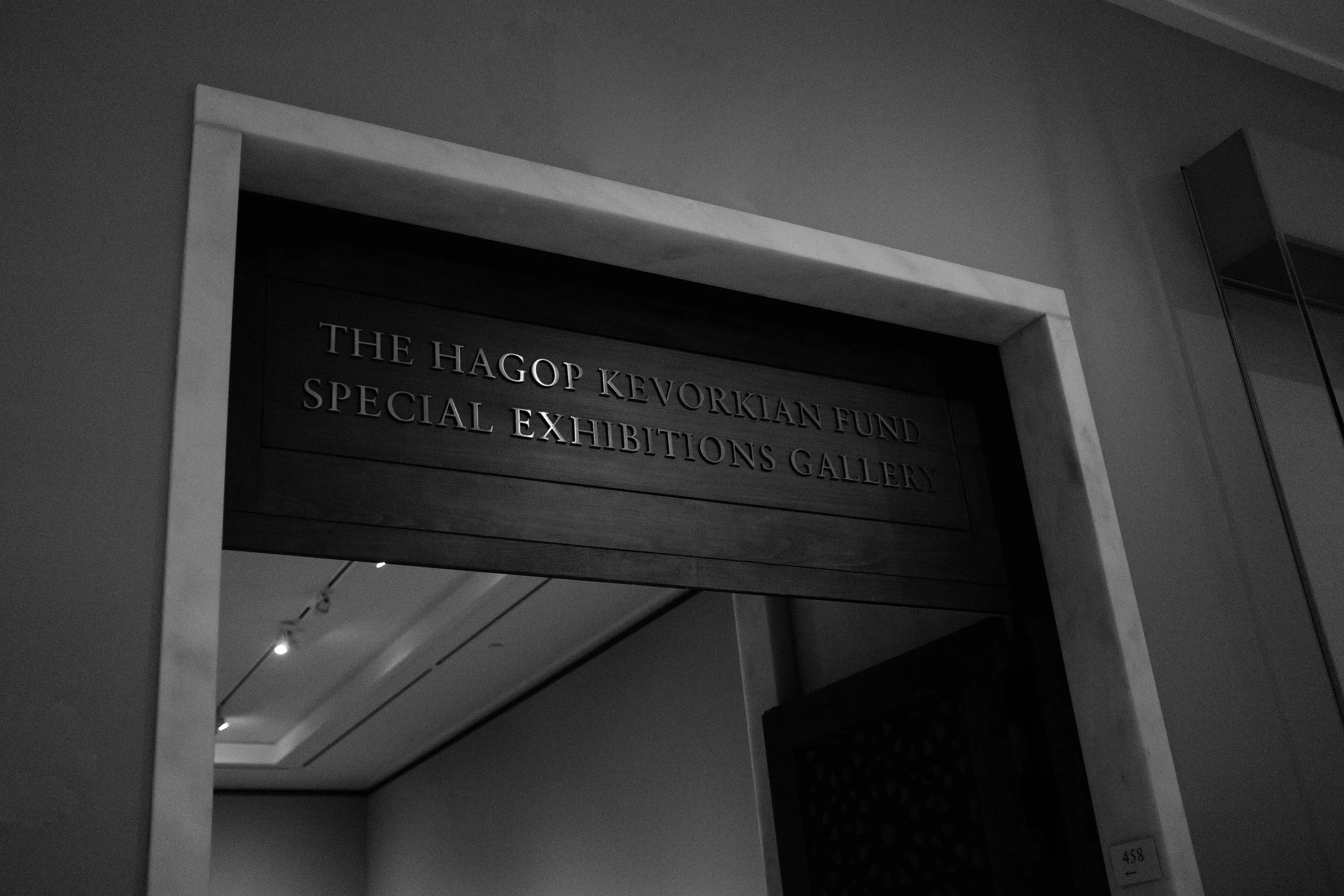
Painting (2025)
Hagop Kevorkian (Յակոբ Գէորգեան,1872-1962), Armenian-American art dealer and collector whose work helped introduce Near Eastern and Islamic art to a wider audience in the United States. In 1951, he created The Kevorkian Foundation, which became an important source of support for the Metropolitan Museum of Art, funding fellowships, publications, and acquisitions of Middle Eastern art.
The Metropolitan Museum of Art
FujiFilm X-T1
Upper East Side, New York